Regulatory or Investigational Status
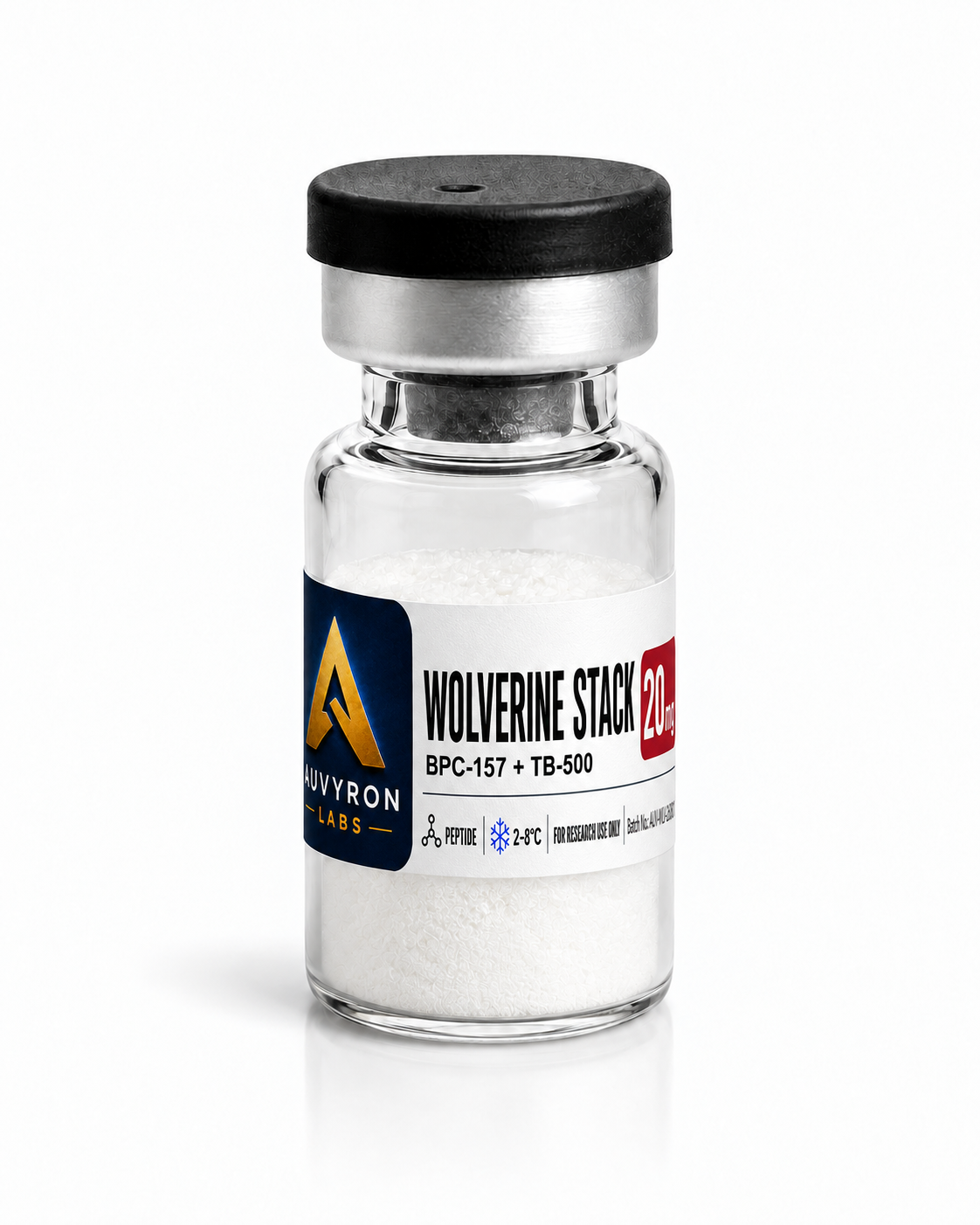
This research blend is not an FDA-approved medicine. FDA discusses safety-data and characterization limitations for BPC-157 and thymosin beta-4 fragments. A product name is not evidence of clinical authorization or analytical equivalence. [4]
Mechanisms or Pathways Under Investigation
BPC-157 studies have examined tendon-cell migration, survival under stress and FAK-paxillin signaling. Thymosin beta-4 research has examined cellular migration and wound closure. These are experimentally investigated processes, not established outcomes for the blend. [1][2]
Published Research Highlights
Ex vivo and in vitro · Tendon cells
Chang and colleagues reported tendon outgrowth, cell survival and migration changes associated with BPC-157 in experimental systems. [1]
Preclinical · Thymosin beta-4
Malinda and colleagues investigated wound closure using thymosin beta-4. The study was not a trial of an AUVYRON TB-500 combination. [2]
Animal model · Tendon injury
Staresinic and colleagues examined Achilles tendon recovery in rats. Animal outcomes cannot establish recovery in humans. [3]
Evidence Level and Research Limitations
There is no controlled human evidence for this exact blend in the selected sources. A mechanistic rationale does not demonstrate synergistic effects, faster rehabilitation or a clinical benefit. Full-length proteins, fragments and marketed mixtures are not interchangeable. [1][2][3][4]
Selected Scientific References
- Chang et al. BPC-157, tendon outgrowth, cell survival and migration. Journal of Applied Physiology, 2011. ↗Ex vivo and in vitro study
- Malinda et al. Thymosin beta4 accelerates wound healing. Journal of Investigative Dermatology, 1999. ↗Preclinical study · Thymosin beta-4
- Staresinic et al. BPC-157 in transected rat Achilles tendon and tendocyte models. Journal of Orthopaedic Research, 2003. ↗Animal and in vitro study
- FDA. Safety and characterization considerations for selected peptide substances. ↗Official regulatory material
Educational and Research Disclaimer
This page is for educational and scientific-reference purposes. It does not provide medical advice, diagnosis, treatment recommendations, dosing guidance or instructions for human use. References concern the specific materials and conditions studied; they are not evidence that an AUVYRON product has been evaluated in those studies. Product presentations are catalog identifiers, not use instructions.
FOR RESEARCH USE ONLY. NOT FOR HUMAN OR VETERINARY USE.