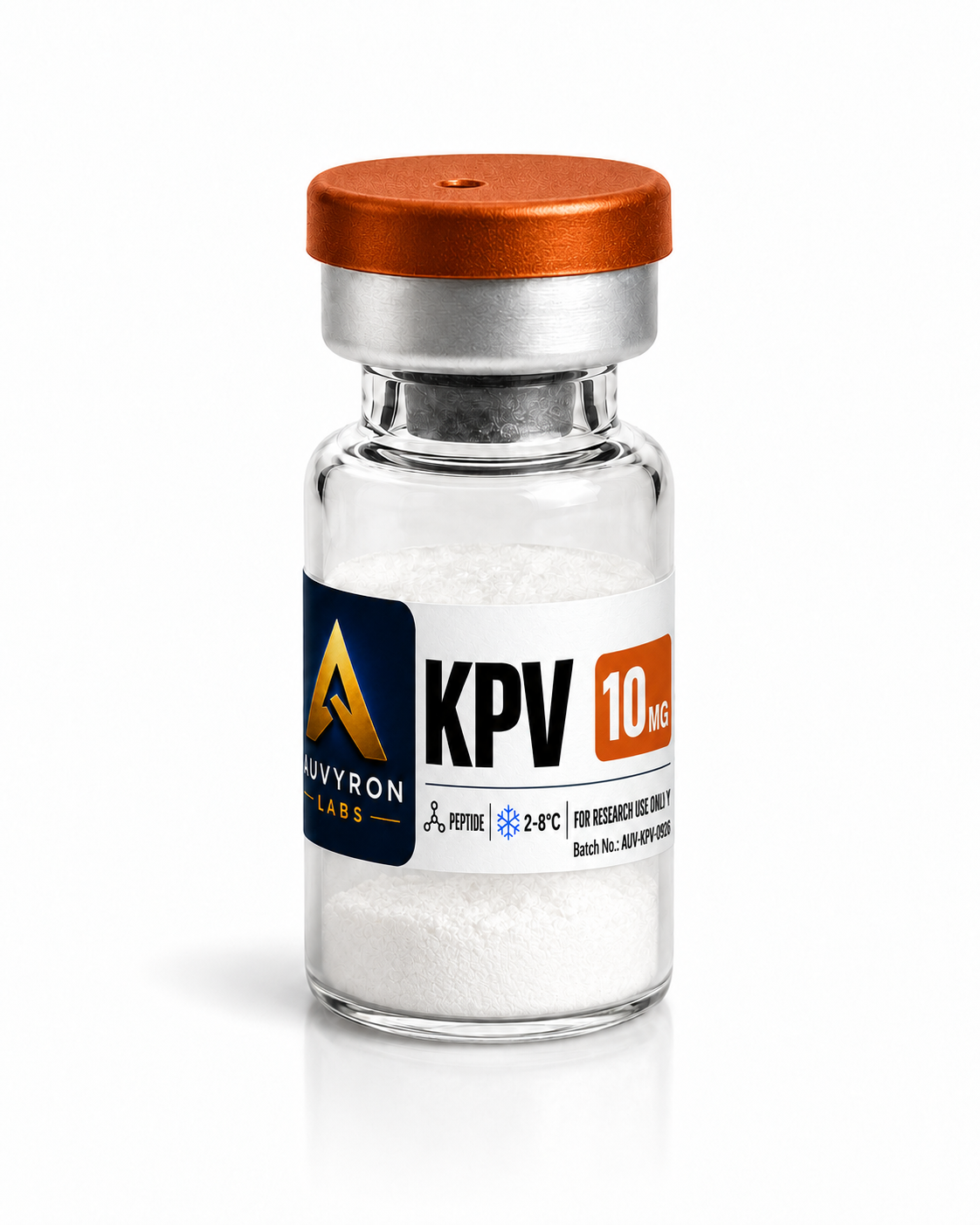
What the Compound Is
The tripeptide lysine-proline-valine, corresponding to the C-terminal sequence of alpha-melanocyte-stimulating hormone. A fragment is not biologically interchangeable with the complete parent peptide. [1]
Regulatory or Investigational Status
KPV is an investigational research material. FDA reports that it has not identified human exposure data for KPV drug products and that important safety information is lacking. [2]
Mechanisms or Pathways Under Investigation
Dalmasso and colleagues examined uptake through the peptide transporter PepT1, alongside NF-kappaB and MAP kinase signaling and inflammatory cytokine responses. These are mechanisms investigated in experimental systems. [1]
Published Research Highlights
In vitro · Peptide transport
Experimental uptake and signaling work linked KPV activity to PepT1 in intestinal epithelial and immune cells. [1]
Animal and delivery research · Specialized carriers
Xiao and colleagues studied KPV in hyaluronic-acid-functionalized nanoparticles and a hydrogel. Experimental cell and mouse results supported further study of the delivery system, rather than establishing clinical effects of an ordinary KPV vial. [3]
Evidence Level and Research Limitations
Findings from cells and mice cannot establish human efficacy, a clinical regimen or long-term safety. The selected sources do not provide controlled human evidence for this catalog product. Delivery method, exposure and disease model all constrain interpretation. [1][2]
Selected Scientific References
- Dalmasso et al. PepT1-mediated tripeptide KPV uptake reduces intestinal inflammation. Gastroenterology, 2008. ↗In vitro and mouse study
- FDA. Selected peptide safety considerations, including KPV. ↗Official regulatory material
- Xiao et al. Targeted KPV delivery via hyaluronic-acid-functionalized nanoparticles. Molecular Therapy, 2017. ↗Cell and mouse delivery study
Educational and Research Disclaimer
This page is for educational and scientific-reference purposes. It does not provide medical advice, diagnosis, treatment recommendations, dosing guidance or instructions for human use. References concern the specific materials and conditions studied; they are not evidence that an AUVYRON product has been evaluated in those studies. Product presentations are catalog identifiers, not use instructions.
FOR RESEARCH USE ONLY. NOT FOR HUMAN OR VETERINARY USE.