Regulatory or Investigational Status
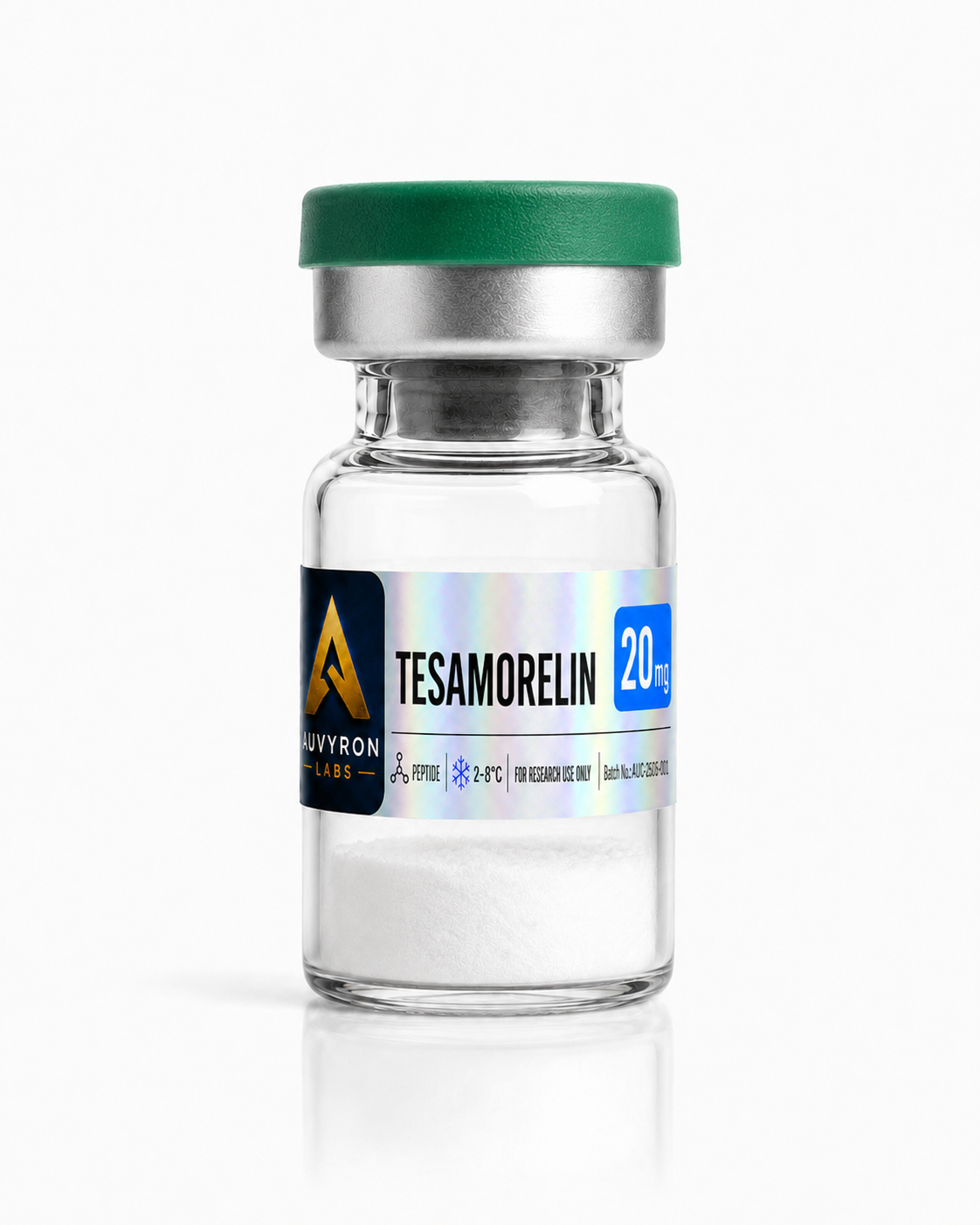
FDA-approved EGRIFTA formulations have a specific indication for excess abdominal fat in adults with HIV-associated lipodystrophy. They are not indicated for general weight-loss management. AUVYRON catalog vials are not those approved formulations. [3]
Published Research Highlights
Human randomized trials · Visceral fat
A pooled phase 3 analysis reported reductions in visceral adipose tissue, with maintenance among participants continuing study treatment through 52 weeks. [1]
Human randomized trial · Liver fat
A six-month study found reductions in visceral fat and modest liver-fat reductions in adults with HIV and abdominal fat accumulation. This was a preliminary study of a specific population. [2]
Clinical follow-up · Durability
Longer follow-up examined continued exposure and treatment withdrawal. The findings do not establish a permanent change after discontinuation. [4]
Evidence Level and Research Limitations
Long-term cardiovascular safety is not established in the FDA labeling. Glucose intolerance, elevated IGF-1, fluid retention and other adverse effects require consideration when interpreting the clinical literature. Approved tesamorelin formulations differ from one another and from research vials. [3]
Selected Scientific References
- Falutz et al. Pooled analysis of phase 3 tesamorelin trials with safety extension data. JCEM, 2010. ↗Human randomized trials
- Stanley et al. Effect of tesamorelin on visceral fat and liver fat. JAMA, 2014. ↗Human randomized trial
- FDA. EGRIFTA WR prescribing information, 2025. ↗Official regulatory material
- Falutz et al. Long-term safety and effects of tesamorelin in HIV patients. AIDS, 2008. ↗Human trial follow-up
Educational and Research Disclaimer
This page is for educational and scientific-reference purposes. It does not provide medical advice, diagnosis, treatment recommendations, dosing guidance or instructions for human use. References concern the specific materials and conditions studied; they are not evidence that an AUVYRON product has been evaluated in those studies. Product presentations are catalog identifiers, not use instructions.
FOR RESEARCH USE ONLY. NOT FOR HUMAN OR VETERINARY USE.