Regulatory or Investigational Status
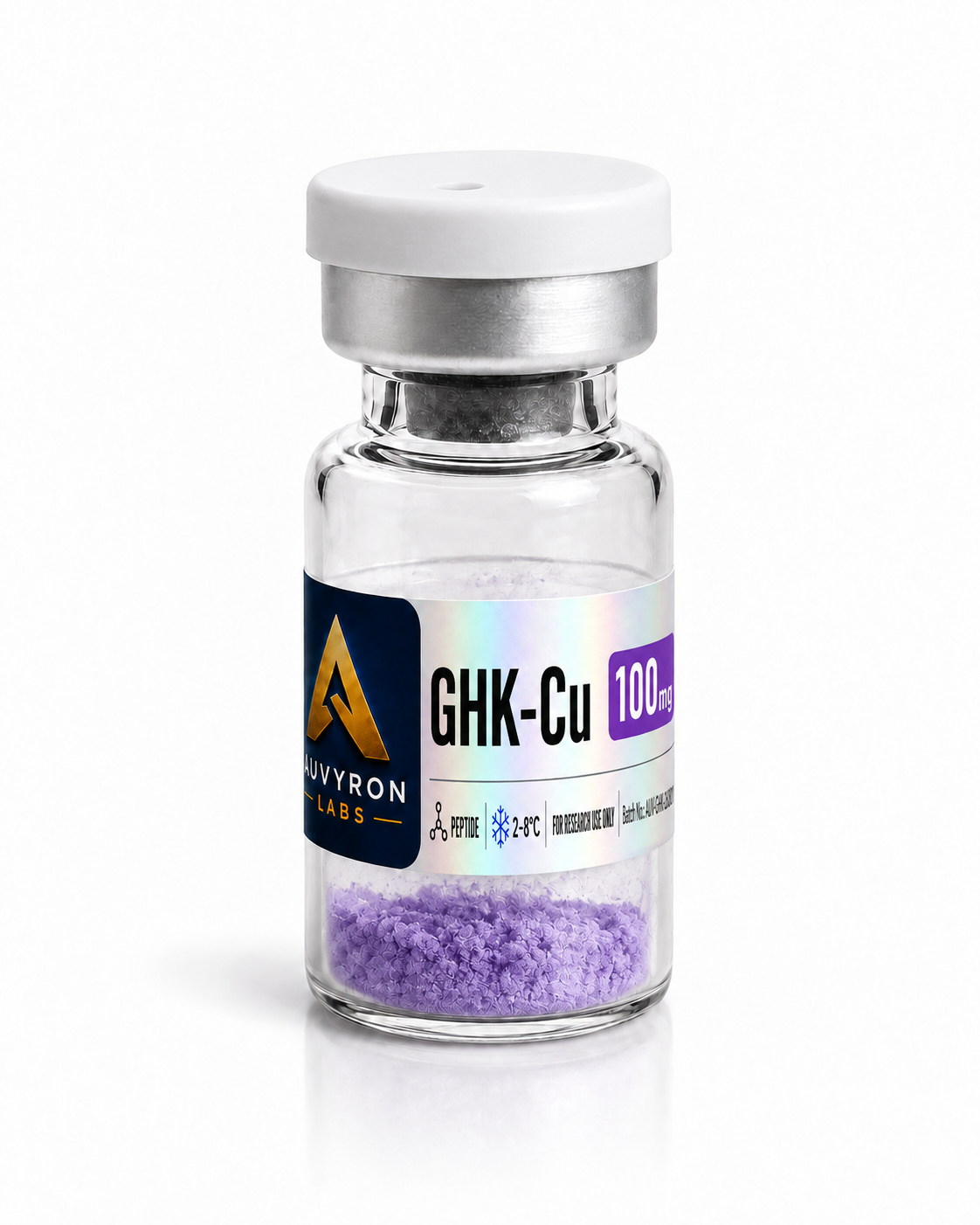
The AUVYRON presentation is a research material. Cosmetic use and laboratory publications do not establish FDA approval as a therapeutic injectable. FDA highlights characterization and immunogenicity concerns for injectable compounded GHK-Cu. [3]
Published Research Highlights
In vitro · Collagen synthesis
Maquart and colleagues reported stimulation of collagen synthesis in fibroblast cultures exposed to GHK-Cu. The endpoint was a laboratory measure. [1]
In vitro · Matrix components
Wegrowski and colleagues studied glycosaminoglycan synthesis in human fibroblast cultures and described a concentration-dependent response. [2]
Evidence Level and Research Limitations
Cultured human cells are not a clinical trial in humans. These sources do not establish an injectable regimen, hair-restoration outcome or anti-aging benefit. Translating matrix biomarkers to clinical results requires controlled human evidence and product-specific safety data. [1][2][3]
Selected Scientific References
- Maquart et al. Collagen synthesis in fibroblast cultures with GHK-Cu. FEBS Letters, 1988. ↗In vitro study
- Wegrowski et al. Sulfated glycosaminoglycan synthesis with GHK-Cu. FEBS Letters, 1992. ↗In vitro study
- FDA. Selected peptide safety considerations, including injectable GHK-Cu. ↗Official regulatory material
Educational and Research Disclaimer
This page is for educational and scientific-reference purposes. It does not provide medical advice, diagnosis, treatment recommendations, dosing guidance or instructions for human use. References concern the specific materials and conditions studied; they are not evidence that an AUVYRON product has been evaluated in those studies. Product presentations are catalog identifiers, not use instructions.
FOR RESEARCH USE ONLY. NOT FOR HUMAN OR VETERINARY USE.